
More than websites.
We help businesses turn ideas into digital products, platforms, and systems that solve real problems and create lasting value.
What we do
Systems, not pages
A website is one surface of a larger system. Most of the work sits underneath it: how information is structured, who owns it, what it connects to, and what happens when something unusual arrives.
- Strategy
- Design
- Development
- Delivery
Our mission
Build better digital systems for real businesses.
Our mission is to make digital projects clearer, more useful, and easier to execute. We combine strategy, design, development, and project leadership so clients are not left coordinating disconnected tools, vendors, and decisions.
The future won't be built by bigger teams. It will be built by organizations that learn faster, adapt faster, and use their systems better.
Content models · shared templates · the pages people actually see
What we believe
Four positions we work from
These are the opinions behind the recommendations. They are the reason two similar-looking projects can end up on completely different stacks.
Technology should fit the business.
No default platform.
We do not force every project into the same platform, CMS, or framework. The right answer depends on what the content is, who edits it, what it has to connect to, and how long it needs to last.
Design should solve something.
Clarity over decoration.
Good design should improve clarity, usability, trust, and action. If a layout looks considered but nobody can complete the task it exists for, it has not done its job.
Complexity should earn its place.
Right-sized, both ways.
We avoid overengineering small projects and underbuilding systems that need to grow. Both failures cost the same thing in the end — a rebuild that was avoidable.
Communication is part of delivery.
No silent stretches.
We explain decisions, flag risks early, and keep clients informed throughout the project. A surprise at launch is usually a conversation that should have happened in week two.
Our promises
What you can expect from us
Not a values list. These are the commitments a project is actually run against.
Clear communication
Plain explanations of what we are doing and why, in language that does not require a developer to translate.
An adaptable process
The plan bends to the project. A brochure site and a public-service platform do not get the same ceremony.
Right-fit technology
The stack follows the requirements. We will tell you when the simpler option is the better one.
Honest recommendations
Including when the answer is to spend less, phase the work, or keep what you already have.
Ownership through launch
We stay accountable for the whole path — build, QA, migration, and the day it goes live.
Specialist support when needed
We bring in trusted specialists for depth we do not carry in-house, and we manage them.
Long-term thinking
Decisions are weighed against what happens in year two, not only what ships fastest this month.
How we work
A flexible process built around the project
The six stages are a spine, not a checklist. A simple marketing site should not be managed like a public-sector platform or a custom application — the stages that matter expand, and the ones that do not get compressed or skipped.
Where a project starts also varies. Some arrive with discovery already done; others need it most of all.
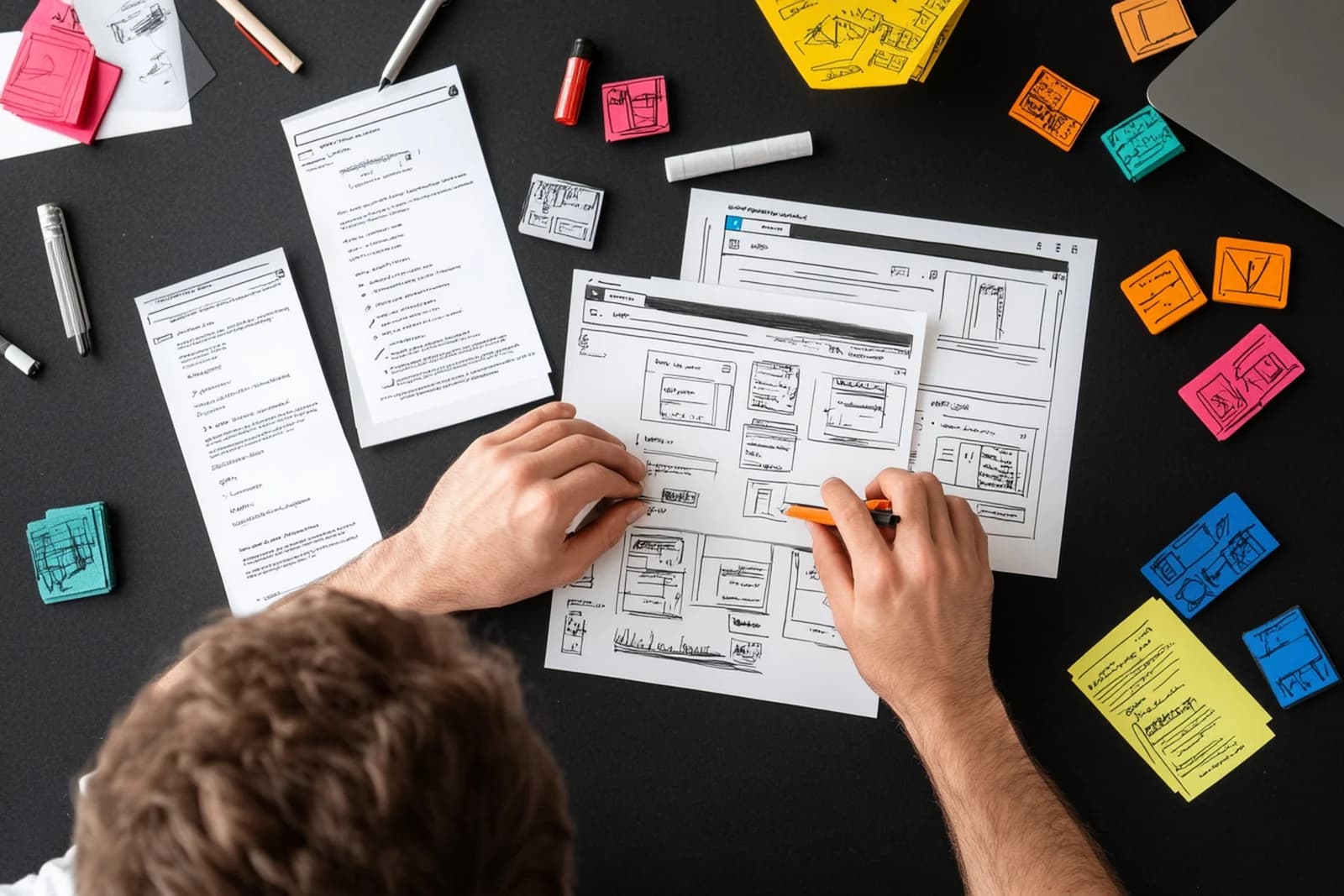
Discover and define, before anything is built
Discover
Understand the business, the audience, the existing systems, and the constraints that are real rather than assumed.
Define
Agree what the project actually has to accomplish, what is in scope, and what success looks like in plain terms.
Design
Information architecture, content models, and interface work — what the pages are, and which system owns which information.
Build
Development, integrations, and content structures, with decisions explained as they are made rather than after.
Launch
QA, migration, accessibility and performance checks, and the coordination it takes to go live without drama.
Improve
Measure what happens next, fix what the real world exposes, and extend the system as the business changes.
How we choose technology
No default stack
WordPress may be right. So may Next.js, Webflow, Payload, Sanity, PHP, or a simpler static build. The answer depends on the business.
We do not start with a preferred framework. We evaluate the project and choose the architecture that fits.
Three kinds of question, asked of three different groups of people. Nothing here is scored or ranked — which cluster dominates changes from one project to the next, and that is the whole reason there is no default answer.
One set of requirements. Several valid answers.
Content & editing
Answered with the people who will live in the CMS.
Content complexity
How many content types exist, how they relate, and whether editors need structure or a blank canvas.
Editing needs
Who updates the site, how often, and how much they should be able to change without a developer.
Long-term maintenance
Who maintains it after launch, with what skills, and what it costs to keep healthy for years.
Technical requirements
Usually where a platform is ruled out rather than ruled in.
Integrations
What has to exchange data — CRM, payments, booking, email, internal tools — and in which direction.
Performance
What the page weight and rendering strategy need to be for the audience and devices that actually visit.
Accessibility
The standard the organization is held to, and how much of it the platform helps or hinders by default.
Security
What data is handled, who has access, and what the update and patching story looks like over time.
Scalability
Whether this grows in traffic, content, contributors, or functionality — and which of those is likeliest.
Project constraints
The two that decide how much of the rest is reachable now.
Budget
What the build can justify, and where custom work returns more than it costs.
Timeline
What has to be live by when, and which parts can follow in a second phase without rework.
What we can own
One team, end to end
These are not separate engagements you assemble yourself. They are stages of one system, and we can carry any part of it — or all of it.
Plan
- Strategy & product planning
- UX/UI & information architecture
- Project coordination
Build
- Web development
- CMS & content systems
- Applications & digital tools
Connect & ship
- Integrations & automation
- Analytics & SEO foundations
- QA, launch, and optimization
Who we are
A small studio that stays close to the work
WebCraft Labz is a small, hands-on digital studio. You work directly with the people making the decisions — there is no account layer between you and the build. When a project needs deeper expertise than we carry in-house, we bring in trusted specialists and manage them ourselves rather than handing you another vendor to coordinate.
That keeps three things true: communication stays direct, the team structure flexes to the project rather than the other way around, and one party stays accountable from the first conversation through launch.
Meet Axon
Axon is our research and intelligence platform exploring how AI, organizational systems, and human decision-making intersect.
What began as an experiment in knowledge systems has become a broader effort to understand how organizations turn information into decisions — and where the coordination cost of doing that actually sits.
Explore our thinking
The WebCraft Labz Resource Center
Guides, research notes, and project breakdowns covering web development, software, and AI automation — the same thinking that goes into client work, published openly.
- HubThe Resource CenterGuides, research notes, and project breakdowns, organized by what you are trying to do.
- SeriesSynthetic MindsA longer-form series on AI, organizational systems, and how decisions actually get made.
- WritingArticles & build logsThe same thinking that goes into client work, published as it happens.
Start a project
Bring us the problem, not the platform.
You don't need to know whether you need WordPress, Next.js, a headless CMS, or a custom application. Tell us what the business needs to accomplish. We'll help determine the right path, design the experience, build the system, and manage it through launch.