
⚡ Episode 4 — The Unexpected
Why The Best Ideas Rarely Arrive On Schedule
Why The Best Ideas Rarely Arrive On Schedule
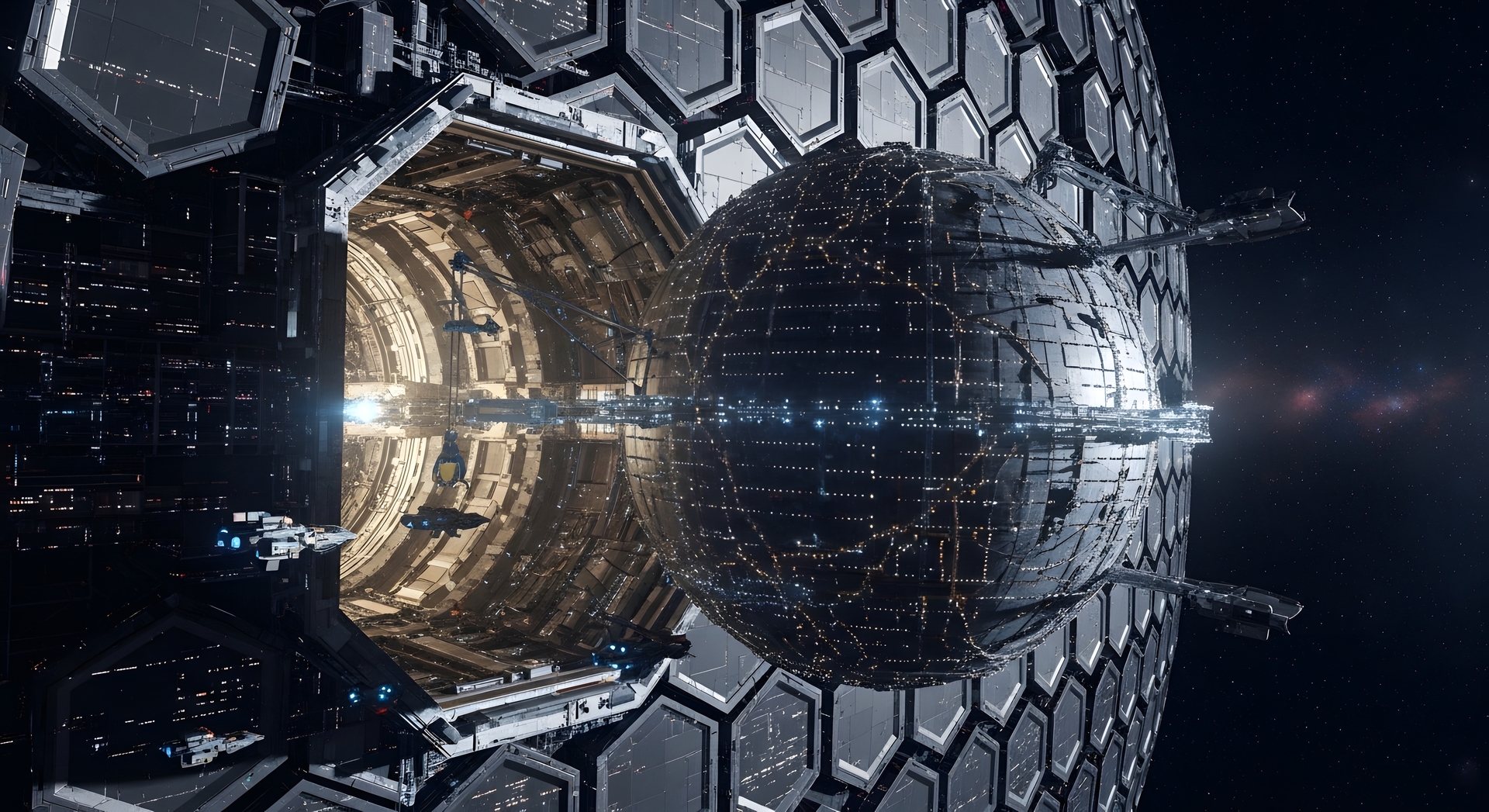
Most discoveries begin as mistakes.
Not all of them.
But more than we'd like to admit.
Penicillin.
Microwaves.
X-rays.
Entire industries exist because somebody was looking for one thing and found something else.
We like to imagine innovation as a straight line.
A goal.
A plan.
A solution.
Reality is usually messier.
The path bends.
The map changes.
The destination moves.
And sometimes the thing that changes everything is the thing nobody intended to find.
The Problem With Knowing Exactly What You Want
Humans are remarkably good at pursuing goals.
It's one of our greatest strengths.
We decide where we want to go.
Then we focus.
We filter distractions.
We eliminate unnecessary possibilities.
We stay on course.
But there's a hidden cost.
The more focused we become, the more likely we are to miss something unexpected.
Something useful.
Something better.
Every goal illuminates one path.
And casts shadows over a thousand others.
For most of human history, that tradeoff was unavoidable.
We simply didn't have enough time to explore every possibility.
Now we do.
Or at least, we have help.
The Strange Advantage of Synthetic Minds
Synthetic minds don't get bored.
They don't become attached to a plan.
They don't care which path succeeds.
They simply explore.
Again.
And again.
And again.
Sometimes that produces nonsense.
Dead ends.
Ideas that should stay buried.
But occasionally it produces something else.
An approach nobody considered.
A connection nobody noticed.
A possibility hiding just outside the edge of human intuition.
The future rarely arrives from the direction we're watching.
Following The Wrong Trail
One of the most valuable habits I've developed while working with AI is learning not to abandon strange ideas too quickly.
Sometimes an output looks wrong.
Not incorrect.
Just unusual.
Different enough to dismiss.
But if you stay with it a little longer, something interesting happens.
The strange idea connects to another idea.
Then another.
Then another.
And eventually you discover the original idea wasn't the destination.
It was a doorway.
The mistake wasn't useful because it was correct.
It was useful because it led somewhere else.
Exploration Is Becoming Cheap
For most of history, exploration was expensive.
Trying ten ideas instead of one required ten times the effort.
Ten times the resources.
Ten times the risk.
Today that's changing.
You can explore hundreds of possibilities before breakfast.
Thousands before lunch.
Not because humans became smarter.
Because the cost of experimentation collapsed.
And when experimentation becomes cheap, curiosity becomes more valuable.
The advantage no longer belongs to the person with the answer.
It belongs to the person willing to explore.
The Discovery Mindset
This may be the biggest shift of all.
We're moving from an age of answers...
to an age of exploration.
The old question was:
"What is the solution?"
The new question is:
"What possibilities haven't we seen yet?"
That sounds subtle.
It isn't.
One mindset searches for confirmation.
The other searches for surprise.
One tries to reach the destination.
The other tries to expand the map.
Innovation isn't finding the right path.
It's discovering there were more paths than you realized.
Beyond The Horizon
Perhaps that's the real gift of synthetic minds.
Not intelligence.
Not automation.
Not efficiency.
Perspective.
The ability to show us possibilities we weren't looking for.
Possibilities we might never have considered.
Not because they are better.
Because they are different.
And sometimes different is exactly what progress requires.
Questions Worth Exploring
- How often do AI innovation breakthroughs start as unexpected mistakes?
- Which high-value opportunities are hidden behind human assumptions and bias?
- In modern product development, is exploration becoming more valuable than certainty?
- How does abundant AI-generated possibility change creativity, strategy, and discovery?
Maybe the future won't be built by those who know exactly where they're going.
Maybe it will be built by those willing to follow an unexpected path a little farther.
Build Something Better
Ideas deserve a better home than a generic blog.
WebCraft Labz builds fast, polished websites for businesses and creators who want their ideas to feel premium from the first scroll.
Start a ProjectContinue Reading