
Business demoPublic-service platform2026
ClearWaters Alliance
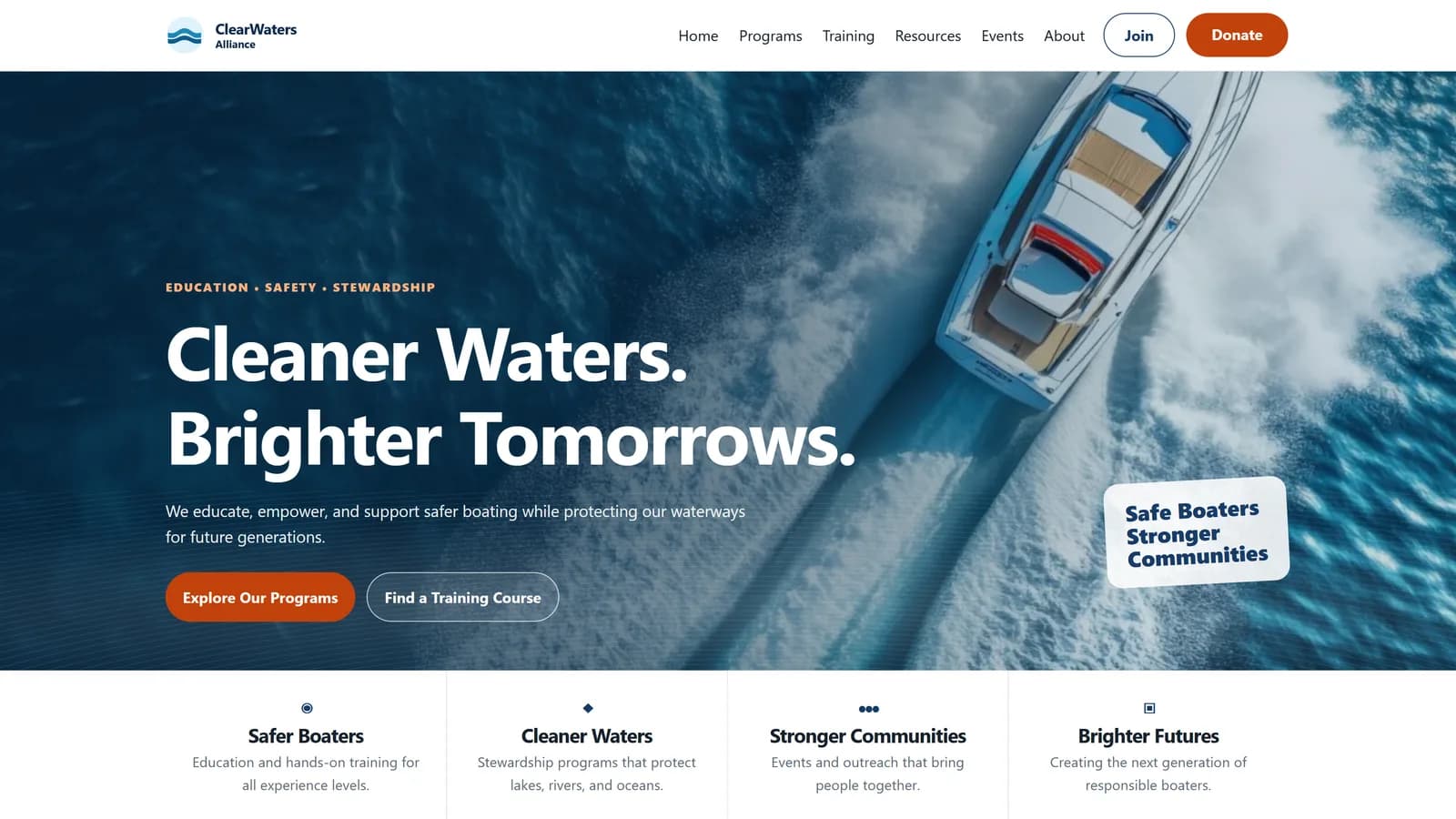
A custom WordPress public-service platform built around education, training, events, and resources.
ClearWaters Alliance is a fictional organization created as a WebCraft Labz demonstration. It is not a real charity or client engagement. Its Donate and Join features are illustrative and do not process donations or registrations.
Why it exists
The problem it was built for
Public-service and nonprofit websites often serve several audiences at once while managing programs, training, events, and educational resources in different formats. The challenge was to make that content easy to manage internally and easy for visitors to discover without turning the site into a collection of disconnected pages.
Programs, Training, Resources, and Events are each modelled on their own terms rather than forced into one shared page template, so a visitor browses by what they came for and an editor adds next season's intake without needing a developer.
The work
What we designed and built
- Modelled the content before drawing any layout, so the structure follows how the material is maintained rather than a sitemap agreed up front
- Chose a classic PHP theme over a page builder, so nothing a visitor sees depends on a plugin staying installed
- Treated the editor as the primary user, so the test for any decision was whether someone could add next season's material without asking us
- Kept the component set small and shared rather than designing each section once, trading some visual variety for a site that stays coherent as it grows
- Verified accessibility and performance against the deployed site instead of claiming them from intent — the two sections below list only what an inspection could confirm
Architecture
How it is put together
- Each content type owns its own archive and single template
- Event details modelled as ACF fields rather than free-text body copy
- Topic and Audience taxonomies cut across all four content types
- Card, banner and CTA partials shared by every template
- Editing happens in stock WordPress screens — no custom admin UI
- PHP renders pages directly; no headless layer and no external CMS
Accessibility
Accessibility work
- Skip-to-content link ahead of the main navigation
- Semantic landmarks: header, main, footer, and labelled navigation
- One h1 per page with a structured h2/h3 hierarchy beneath it
- Decorative imagery given empty alt text so screen readers skip it
- No horizontal overflow down to a 320px viewport
- WCAG 2.2 AA-minded contrast across text and interface colour
Verified against the deployed site. This is accessibility-focused development, not a conformance audit or a certification.
Performance
Performance work
- Responsive WordPress image derivatives with srcset and sizes
- Width and height on every image, reserving layout space up front
- Lazy loading on below-the-fold media
- One variable woff2 per family instead of a file per weight
- Zero third-party requests — no external font or CDN dependency
Techniques applied, not a measured score. No Lighthouse or Core Web Vitals figure is claimed — that would be one run on one machine rather than a property of the build.
Inside the build
What it looks like in use
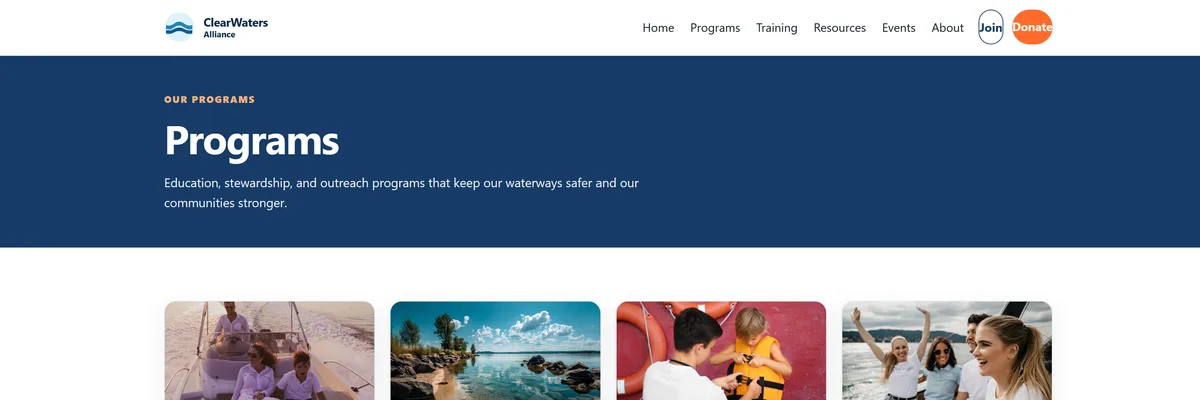
The Programs archive, rendered from the custom post type's own template. 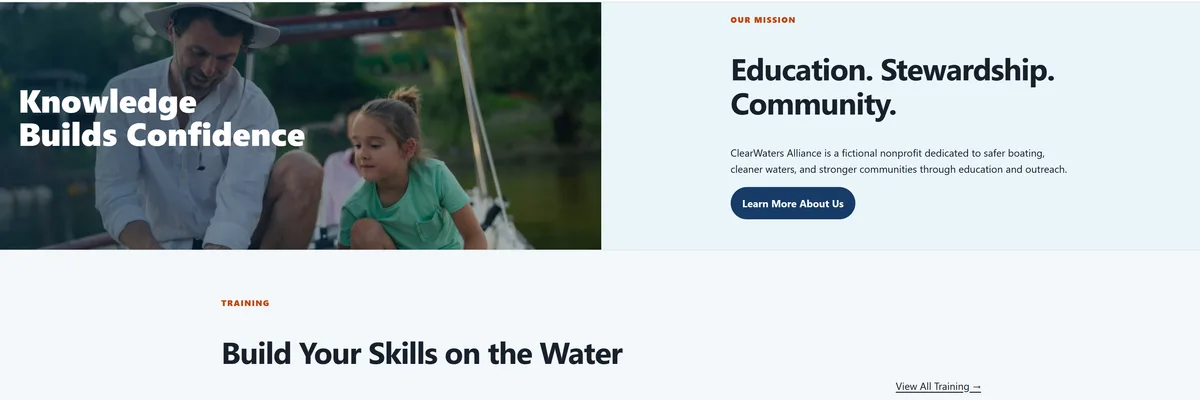
The site states its own fictional status in the mission copy. 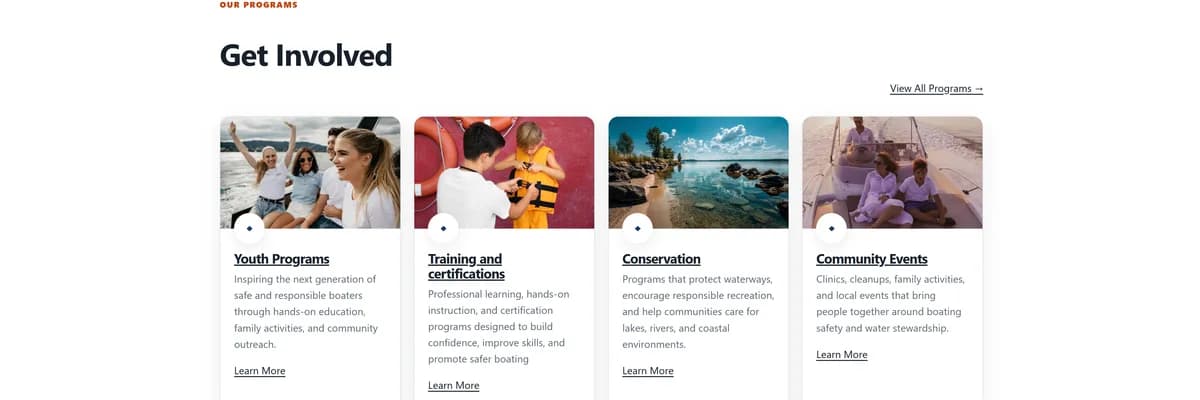
One card component, reused across every content type.
Working on something similar?
If you are planning a site that has to earn its own traffic, we are happy to talk it through — including when the honest answer is that you need less than you thought.