The First AI Generation: How Kids Will Learn, Build, and Think Differently
How AI is reshaping learning, creativity, judgment, and opportunity for the first generation growing up with intelligence on demand.
Every generation inherits a different world.
Some inherited electricity.
Some inherited television.
Some inherited the internet.
The generation growing up today is inheriting something stranger:
Intelligence on demand.
Not information.
Not software.
Intelligence.
And they may be the first humans in history to grow up assuming it has always existed.
They won't remember digging through pages of search results hoping to find the right answer. They won't remember getting stuck on a problem because nobody nearby could explain it a second way. For many of them, the old link between where you grew up and what you could learn will feel like a story their parents tell.
For them, intelligence won't be a destination.
It will be a starting point.
That's not simply a technological shift.
It's a shift in how humans develop, learn, create, and imagine what's possible.
A Different Childhood
Imagine a ten-year-old sitting at a kitchen table with an idea for a game.
Twenty years ago, that idea probably stayed a sketch in a notebook. Ten years ago, it might have become a hobby project after months of tutorials and frustration. Today, that same child can describe the game to an AI, generate artwork, write characters, prototype mechanics, and publish an early version online before dinner.
The technology is impressive.
What's more interesting is that the child doesn't think so.
To them, it's normal.
This isn't a hypothetical anymore. Common Sense Media's 2026 census of American kids ages 9 to 17 found that nearly nine in ten already use or interact with some form of AI, and around a quarter use it every day. Most of the kids who use it have used it to make things: images, videos, stories.
The first AI generation won't experience these tools as revolutionary.
They'll experience them the way previous generations experienced calculators, smartphones, or the internet.
As part of the environment.
Most Adults Haven't Noticed Yet
The shift isn't arriving with an announcement.
It's happening in small, unremarkable moments.
A child asks a question and an AI answers it.
A project gets finished faster.
A skill gets learned earlier than it otherwise might have.
A problem gets solved without asking an adult for help.
None of these moments seem significant on their own.
Together, they represent a real change in how knowledge moves between generations.
For most of human history, expertise flowed downward. Parents taught children. Teachers taught students. Experts taught beginners. The people who held knowledge decided when, and to whom, it was passed on.
Books, libraries, and the internet each loosened that grip.
But AI changes something else.
For the first time, children have direct access to an interactive source of explanation that can respond to them personally, without another human needing to be available.
That doesn't replace parents or teachers.
But it does change their job.
The work becomes less about delivering information and more about helping young people develop judgment, perspective, and taste.
That is a harder job, not an easier one.
We Learned Through Friction
Many of us learned through struggle.
We searched forums.
We broke things.
We guessed.
We got stuck.
We spent hours chasing answers that today can be generated in seconds.
There was value in that friction.
It taught patience.
Persistence.
Resourcefulness.
But it also consumed enormous amounts of time solving problems that had little to do with what we were actually trying to learn.
The first AI generation will still face challenges.
Their challenges will simply look different.
They won't struggle to find information.
They'll struggle to evaluate it.
They won't wonder where the answer is.
They'll wonder which answer to trust.
Why it matters.
And what to do when intelligent systems disagree.
The bottleneck is shifting from access to judgment.
And judgment is considerably harder to teach than algebra.
The early data suggests we're behind on this. In that same Common Sense Media census, only about a third of kids knew that AI can't reliably tell fact from fiction, and only about half had heard anything from a teacher or school about how to judge whether AI-generated information is trustworthy.
The tools arrived years before the instruction did.
Learning Gets Another Layer
For more than a century, education has operated around a practical constraint: one teacher, one classroom, one pace, one explanation.
The system wasn't designed to be rigid.
It was designed to be scalable.
And for most of that century, scale and personalization were in direct tension.
We've known for a long time what the alternative looks like.
In 1984, educational psychologist Benjamin Bloom published what became known as the "two sigma problem": students who received one-on-one tutoring performed dramatically better, on average, than students taught under conventional classroom conditions.
The finding was striking.
The problem was practical.
Nobody could give every child a private tutor.
AI doesn't solve that problem outright, but it changes the economics of it.
A student who doesn't understand something no longer has to hear the same explanation repeated louder. They can get a new example, a different analogy, a visualization, another practice problem, or a different path into the same idea until something clicks.
The more accurate way to describe this isn't that AI removes the classroom.
It's that AI adds an adaptive layer on top of it.
The teacher still sets direction, holds the room, notices the kid who's quietly lost, and decides what matters.
The AI handles the part that never scaled well: the fourth explanation, the extra practice set, the answer at 9 p.m. when the teacher has gone home.
Whether that layer actually improves outcomes depends on how it's used, and the research on that is still young.
A student who leans on AI to skip the thinking may learn less, not more.
But a student who uses it to keep going when they'd otherwise have stopped gets something previous generations rarely had: the chance to move closer to the pace of their own curiosity instead of the pace of the middle of the room.
The Distance Between Idea and Reality Is Collapsing
Previous generations had ideas.
This generation has execution.
A child with a creative vision can now generate illustrations, build interactive stories, prototype games, design products, make videos, and launch websites.
Not as a future aspiration.
As an afternoon project.
The question increasingly becomes:
What do you want to make?
Rather than:
Do you know how?
Somewhere right now, a twelve-year-old is building something that would have required a small team a decade ago.
Not because they're unusually gifted.
Because the tools are fundamentally different.
Childhood is becoming a sandbox for real-world creation, and the effects of that early experimentation may compound for decades.
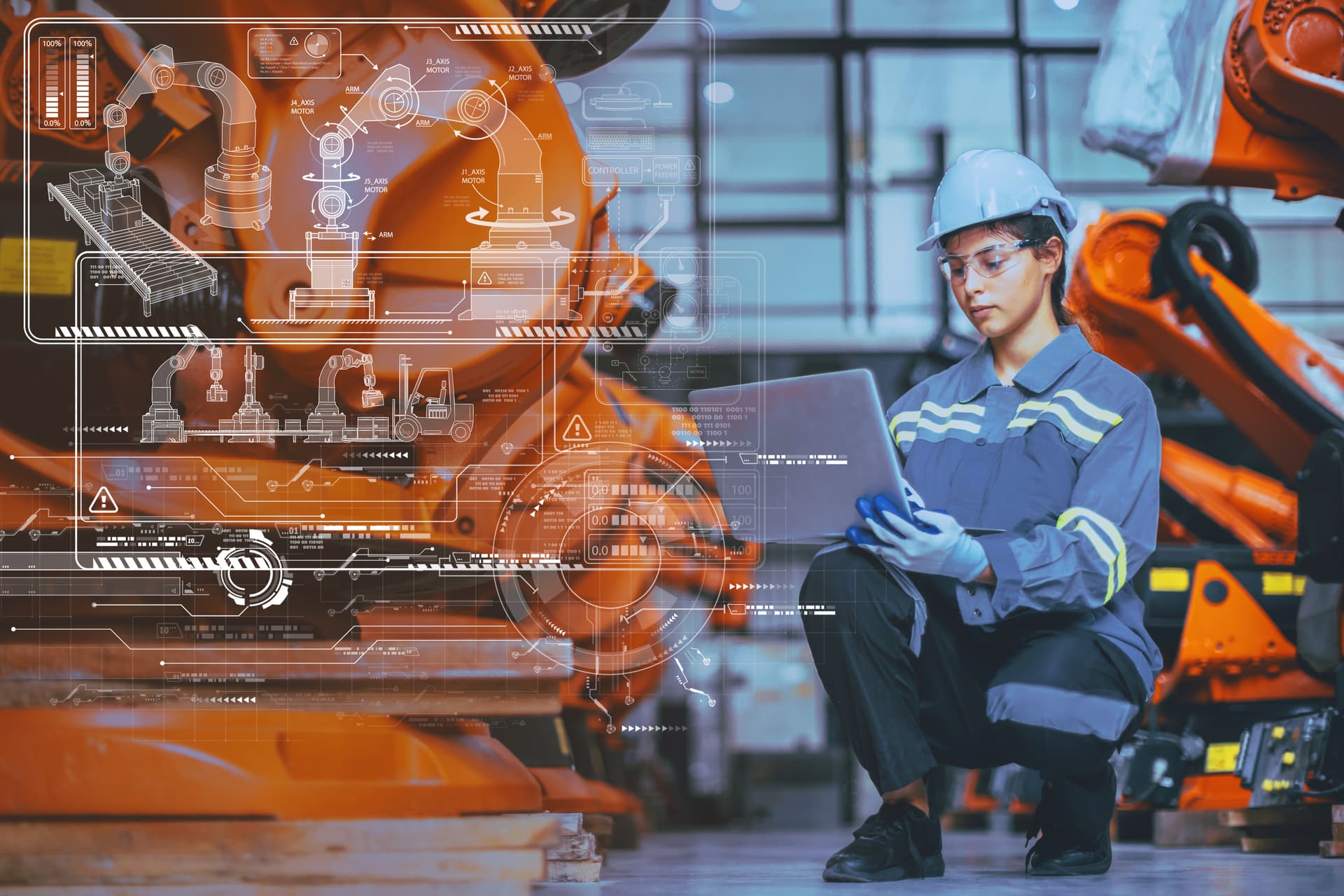
The gap between imagination and execution is shrinking faster than many institutions realize.
Identity Becomes Something You Iterate On
Many of us grew up hearing the same question:
What do you want to be when you grow up?
The assumption behind it was simple.
Identity was a destination.
Something you chose, trained for, and eventually became.
The first AI generation may see identity more the way a builder sees a product.
Something you launch.
Learn from.
Refine.
And rebuild.
The cost of exploration is falling.
Trying a new creative path, learning a new skill, or building in a new domain no longer requires starting from zero.
People may reinvent themselves several times over a life.
Not because they have to.
Because they can.
What We Should Be Honest About Losing
Every generation gains something.
Every generation loses something.
The first AI generation may gain unprecedented access to knowledge, creativity, and opportunity.
But there are questions worth sitting with.
Will constant assistance reduce resilience?
Will instant answers weaken patience?
Will convenience replace deep understanding?
Will people still develop real expertise through years of practice and struggle?
Nobody knows yet.
The risk isn't that AI makes people less capable.
The risk is that easy access to answers without critical evaluation produces people who are very fast but not very deep.
There's a quieter concern too.
Common Sense Media found that more than a third of kids who use AI have talked to it about their feelings or personal problems, and more than half have asked it for advice about their health or body.
A generation that brings its hardest questions to a chatbot first is a generation whose parents and teachers need to be in the loop, not out of it.
Intelligence on demand is only valuable if people develop the judgment to use it wisely.
Building that judgment on purpose may become one of the most important challenges facing education, parenting, and society itself.
From "Can I?" to "Should I?"
For previous generations, many ambitions began with a simple question:
Can I do this?
The barriers were technical, educational, financial, and practical.
For the first AI generation, many of those barriers are beginning to fall.
Their question may increasingly become:
Should I do this?
When creation becomes easier, judgment becomes more important.
When intelligence becomes abundant, wisdom becomes more valuable.
When possibility expands, direction matters more than ever.
A Grandparent and a Grandchild
A grandparent born in the 1950s may have spent hours inside a library searching for information.
Their grandchild may spend those same hours building something with it.
That difference represents more than technological progress.
It represents a shift in how human potential is expressed.
One generation learned how to access knowledge.
The next may learn how to direct it.
What This Means If You're Building
If you're building products, platforms, businesses, or experiences today, this generation is your future user.
And they will arrive with different expectations.
They'll expect intelligent systems, personalized experiences, immediate feedback, adaptive interfaces, and context-aware interactions.
They won't tolerate unnecessary friction.
They won't patiently navigate confusing systems.
And they won't draw a line between "technology" and "experience."
To them, the best products will feel less like tools and more like collaborators.
The companies that understand this shift early may have a significant advantage in the years ahead.
The defining challenge may not be teaching AI how to think. It may be teaching humans how to grow alongside it.
Final Thought
Somewhere tonight, a child is asking an AI a question.
Maybe it's about space.
Maybe it's about art.
Maybe it's about building a game, starting a business, or understanding how the world works.
The answer matters.
But the more important thing may be what they ask next.
Because the defining characteristic of the first AI generation may not be that they have access to intelligence.
It may be that they grow up believing they can build things previous generations never imagined attempting.
And that belief alone could change the future.
Keep Reading
- A Beginner's Guide to AI — where to start if you're new to all of this
- The Human Skills That Matter More in an AI World — what to build in yourself, and in your kids
- Knowledge Access Is No Longer the Problem — what changes when information stops being scarce
- Synthetic Minds — the series on what happens when machines start inventing rather than imitating
WebCraft Labz explores the intersection of AI, enterprise systems, digital infrastructure, and the future of human-machine collaboration.
Build Something Better
Ideas deserve a better home than a generic blog.
WebCraft Labz builds fast, polished websites for businesses and creators who want their ideas to feel premium from the first scroll.
Start a ProjectContinue Reading